The fastest open‑source observability tool for the AI agents you run.
AgentActa turns the logs Claude Code, Codex and OpenClaw already write into a searchable history of every session, message, tool call and file edit. It runs on your machine, with no SDK and nothing to configure.
npx agentacta


Every screenshot here is the app itself, running on its bundled demo data.
Benchmark
Fast where you feel it.
The same history loaded into each tool: 4,400 sessions and 370,000 events. UI timings are each tool driven through its own interface in Chrome, median of 5 runs. Shorter is better.
agentsview 0.45 is the closest open-source tool: it also reads agent log files. Langfuse 4.59 is the most popular open-source tracing platform. Langfuse ingested the history fastest, though it was handed pre-parsed data. Each tool does things AgentActa doesn't; these numbers only measure speed and memory, on one 16-core machine in desktop Chrome. Scrolling a long session was smooth in AgentActa and Langfuse alike.
Method, caveats and scripts to rerun itFeatures
Everything your agents did, one keystroke away.
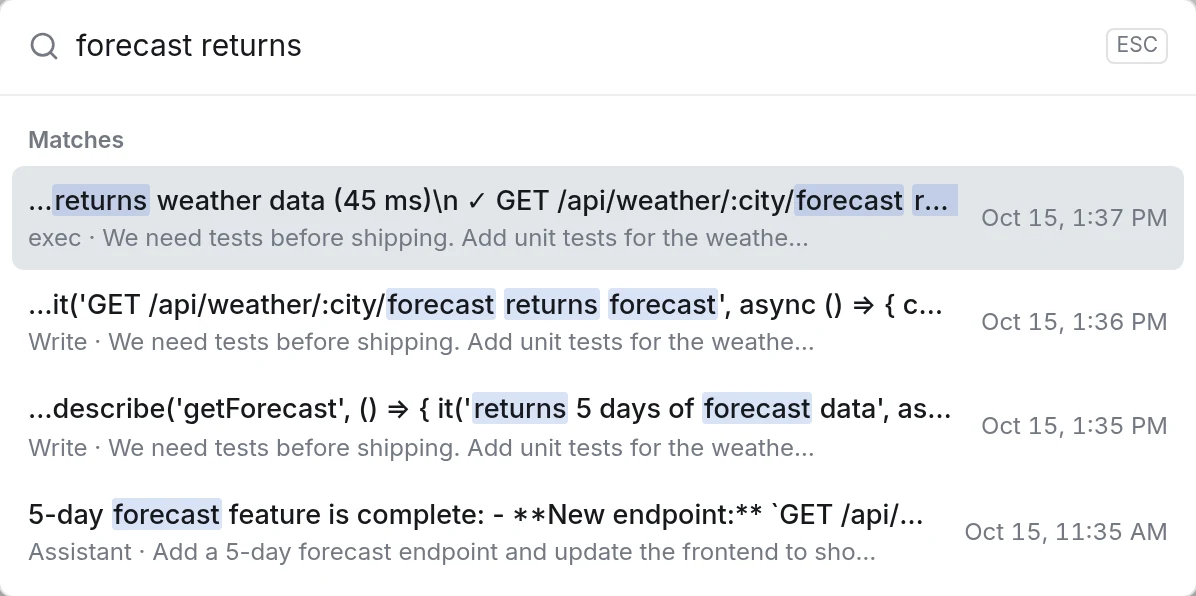
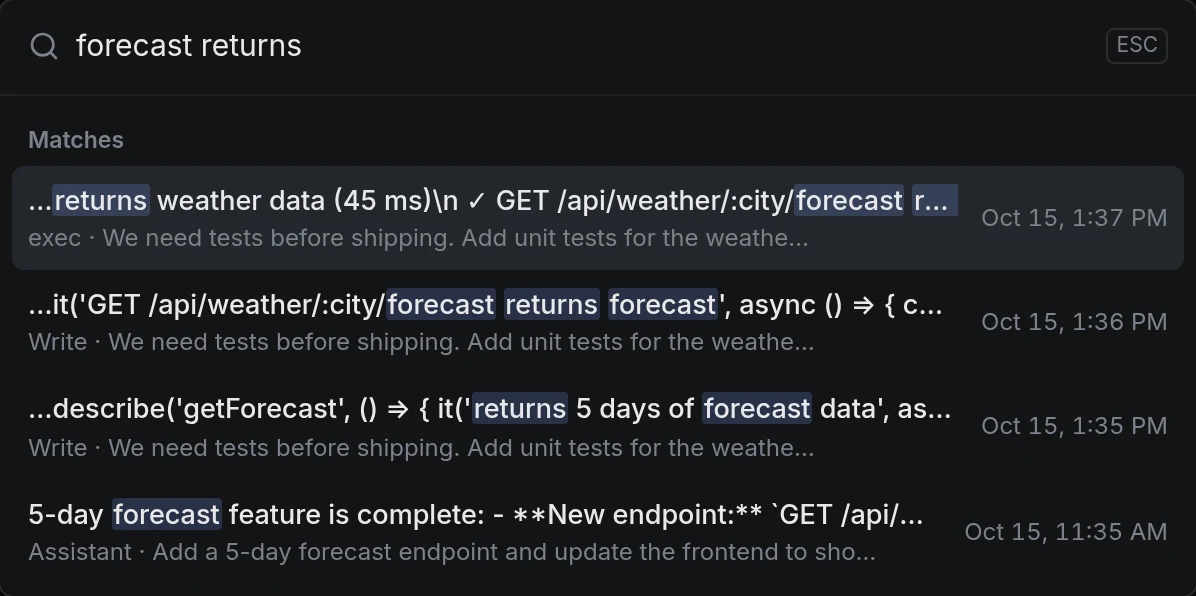
Search everything, as you type
Press ⌘K and type. Sessions by title or prompt, files by path, and the text of every message, tool call and tool output, with each match highlighted. Pick one and the session opens at that exact event.
- Every word matched, in any order
- Command output, file contents and test runs are searchable too
Read any session, even the huge ones
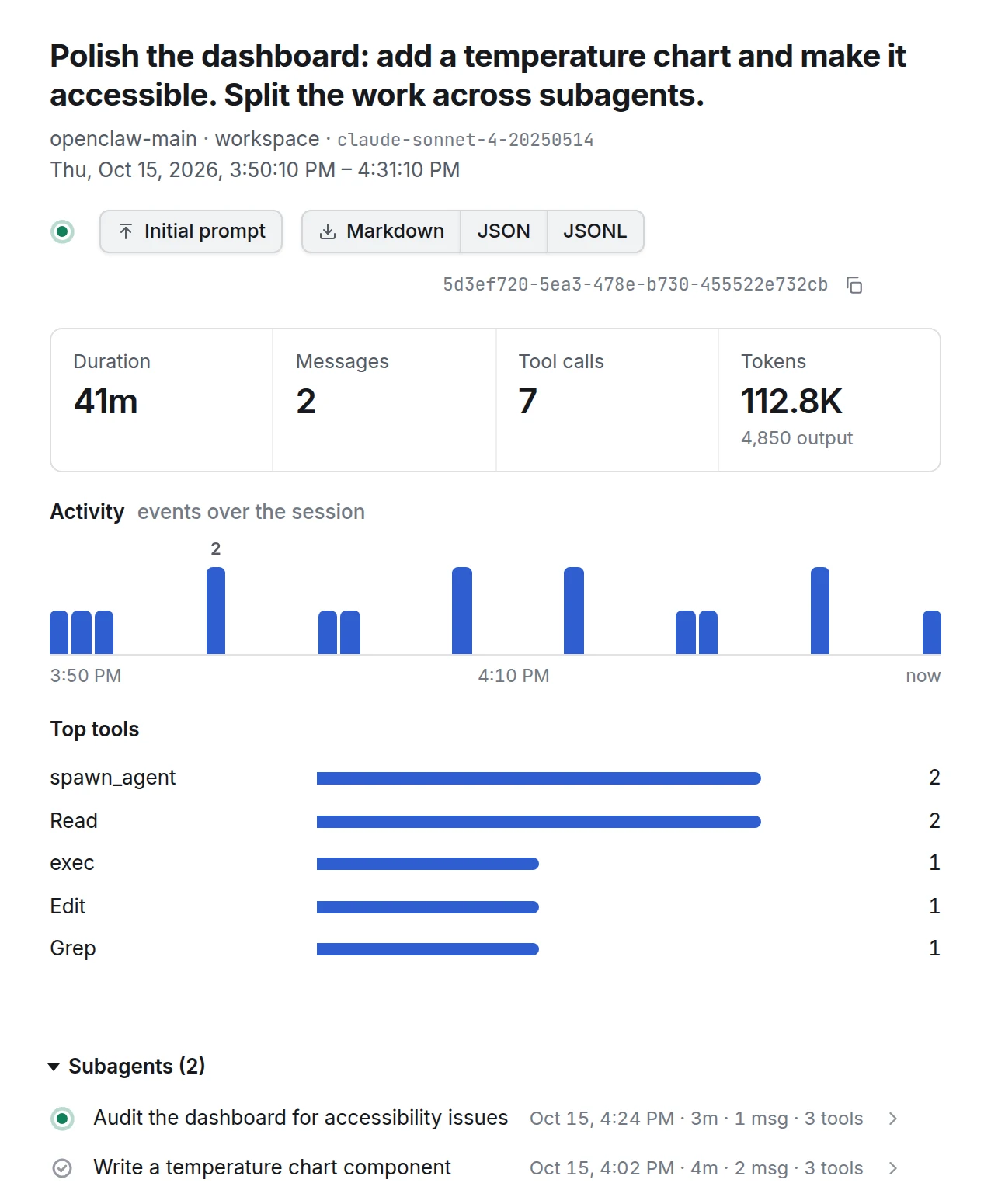
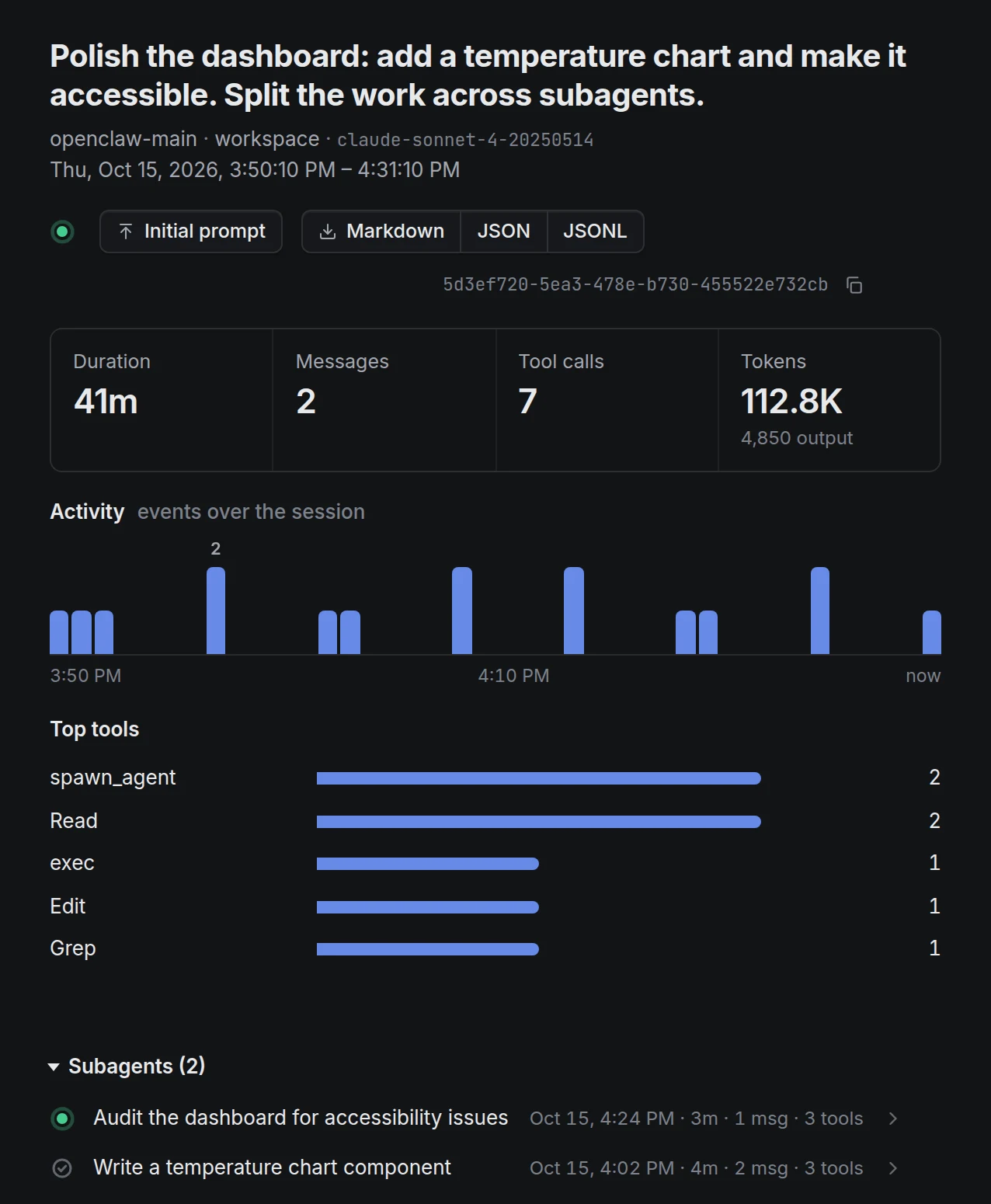
Duration, messages, tool calls and tokens up top, a strip of when it was busy, the tools it leaned on, its subagents, then every event. Long sessions open on their newest events and load the rest as you scroll.
- Live sessions update as the agent works
- Subagents nest under the session that started them
- Export any session as Markdown or JSON
Spot the runs that went wrong
Insights scores every session for repeated tool loops, failed tool calls, work that never produced output, vague instructions and runs that never finished, so the bad ones find you.
- Failures come from the agent's own error flags
- A reliability score for every session
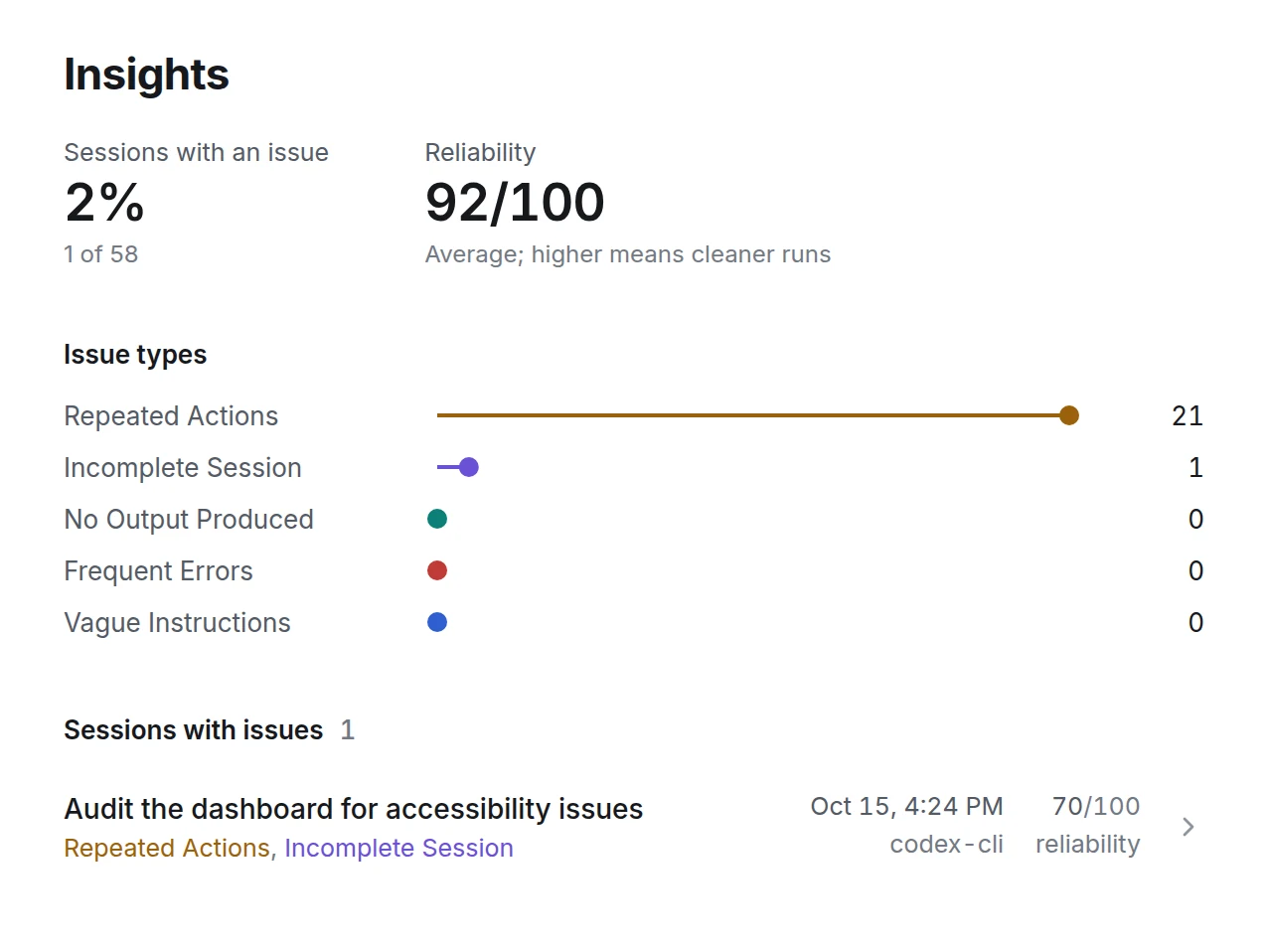
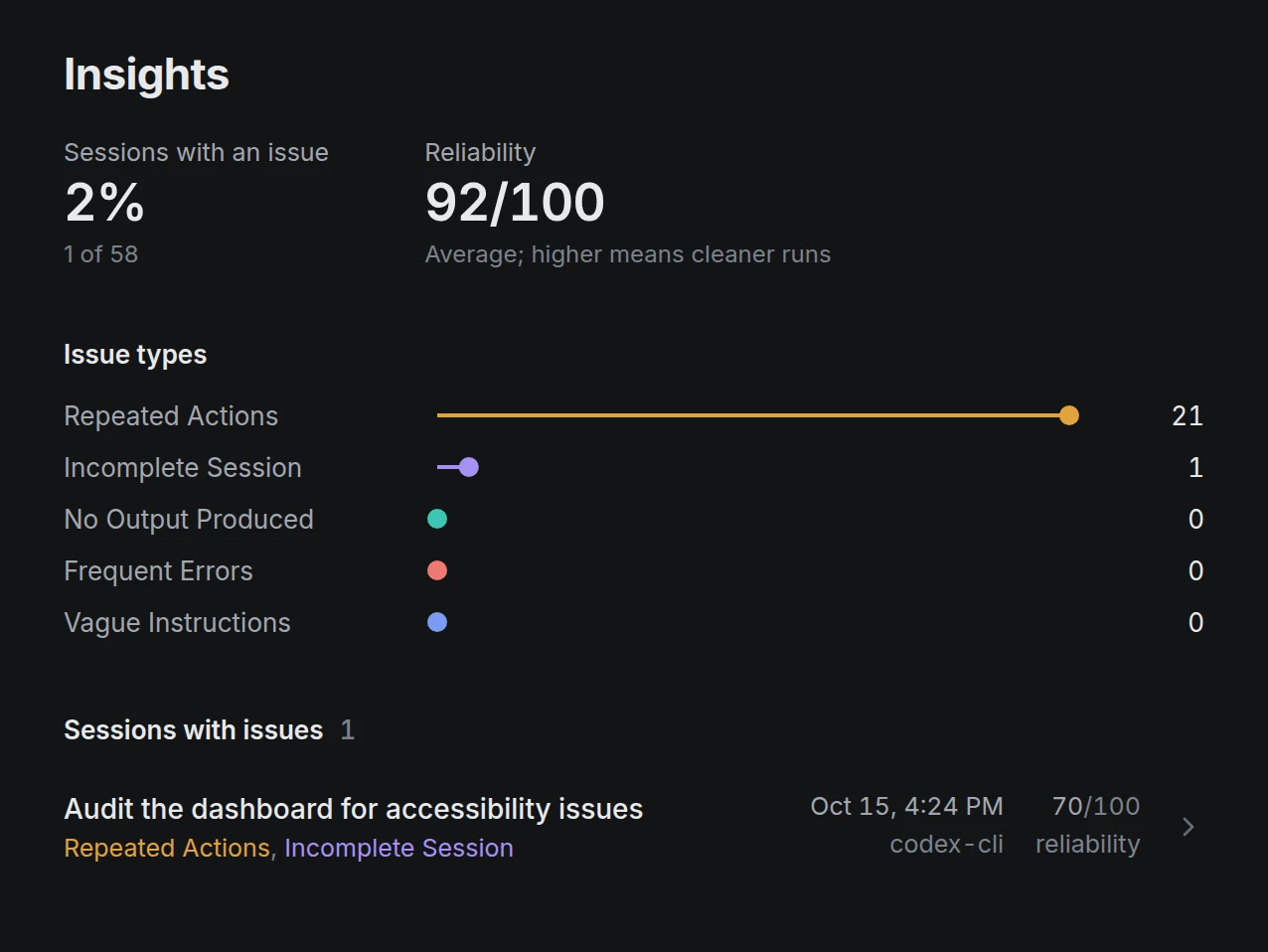
- Overview
- Today against your 14-day average, with activity by day, agent and week.
- Timeline
- Any day's events, grouped under the session they belong to.
- Files
- Every file your agents touched, how often, and by which sessions.
- Keyboard first
- J K to move, Enter to open, Esc to go back.
- On your phone
- A real mobile layout, in light, dark or true black.
- Starts instantly
- Opens on its existing index right away and catches up in the background.
For agents
Give your agents a memory of what came before.
A small local API answers what an agent should ask before it touches anything: who changed this file, what failed last time, what this agent has been doing.
# A file's history: sessions, changes, related files, errors
curl "localhost:4003/api/context/file?path=$(pwd)/src/server.ts"

# What an agent has been doing
curl "localhost:4003/api/context/agent?name=claude-code"

# A repo: cost, agents, most-touched files, common errors
curl "localhost:4003/api/context/repo?path=$(pwd)"

# Search everything, with a snippet per match
curl "localhost:4003/api/find?q=migration+failed"## Project history
Before changing a file, check its history:
curl "localhost:4003/api/context/file?path=<path>"Three lines in a project, and your agents check the record before they start instead of rediscovering the codebase every session.
The full APIWorks with
Reads what your agents already write.
-
Claude Code
~/.claude/projects -
Codex CLI
~/.codex/sessions -
OpenClaw
~/.openclaw/agents
Found automatically, Claude Code subagents included. Add more folders with AGENTACTA_SESSIONS_PATH.
Private by default
Nothing leaves your machine.
- No telemetry, no cloud sync, no account.
- One local SQLite file with full-text search.
- Listens on localhost, and won't serve your network without a token.
- MIT licensed, every line on GitHub.